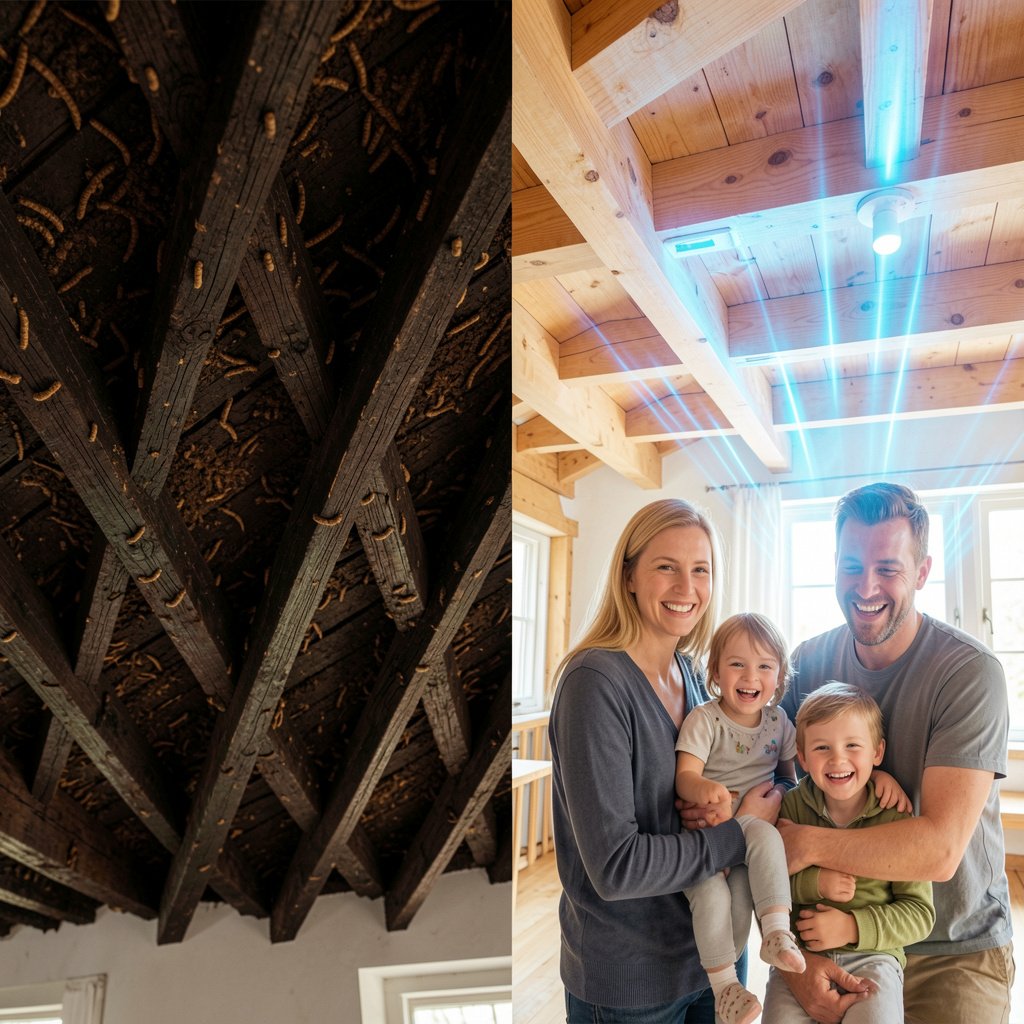
Treating woodworm infestations is rarely as simple as working with a bare piece of timber. In real buildings, wooden beams and structural elements often contain metal nails, screws, brackets, electrical wiring, plumbing, or other embedded components. These obstacles can make some treatment methods more complicated and may lead property owners to wonder whether effective woodworm control is even possible without dismantling parts of the structure.
Modern microwave technology has transformed how infestations are treated in challenging environments. Designed for professional use, Shashel enables technicians to address active wood-boring insects in timber while carefully assessing and working around common building features. This targeted, chemical-free approach helps protect valuable wood without the need for widespread demolition or the routine removal of embedded hardware.
The Reality of Modern Timber Structures
Very few wooden structures consist of timber alone.
Whether in a historic building or a modern home, wooden components are commonly connected or reinforced with metal fittings and surrounded by other building systems.
These may include:
- Steel nails
- Wood screws
- Bolts
- Metal brackets
- Hinges
- Electrical wiring
- Plumbing pipes
- Fasteners
- Reinforcement plates
These elements are a normal part of construction and restoration, making it important for treatment technology to adapt to real-world conditions.
Why Obstacles Can Be a Challenge
Traditional woodworm treatments often require direct access to exposed wood surfaces.
In some situations, obstacles can make treatment more difficult by:
- Restricting access to affected areas
- Limiting where products can be applied
- Increasing the time needed for treatment
- Requiring additional preparation
For buildings with complex timber framing, removing fixtures or dismantling sections of a structure may not be practical or desirable.
Modern treatment methods aim to minimize disruption while still addressing the infestation effectively.
How Microwave Technology Takes a Different Approach
Unlike surface-applied chemical treatments, microwave technology works by delivering controlled electromagnetic energy into the affected timber.
The treatment focuses on eliminating wood-boring insects hidden beneath the surface rather than simply coating the exterior of the wood.
Because woodworm larvae contain considerably more moisture than seasoned timber, they absorb microwave energy more efficiently. Their internal temperature rises to a level that is lethal to the insects, while the treatment is carefully managed to help preserve the surrounding wood.
This allows Shashel to target active infestations without relying on pesticides or fumigants.
Working Around Metal Components
One of the strengths of professional microwave treatment is careful planning before energy is applied.
Technicians inspect the timber to identify embedded components such as:
- Nails
- Screws
- Brackets
- Connectors
- Reinforcement hardware
These features are taken into account when determining the treatment strategy. Professional operators position equipment, adjust treatment parameters, and follow established procedures so that timber can be treated safely and effectively despite the presence of common construction hardware.
Rather than treating every piece of wood in exactly the same way, each application is tailored to the specific structure.
What About Electrical Wiring?
Electrical cables are another common concern, particularly in:
- Roof spaces
- Wall framing
- Floor systems
- Renovated buildings
- Historic properties with updated electrical installations
Before treatment begins, technicians identify nearby wiring and evaluate the treatment area.
Professional inspection and planning help ensure that microwave treatment is carried out appropriately for the building’s construction. If necessary, the treatment approach can be adjusted to account for nearby utilities.
Suitable for Historic Buildings
Historic buildings present unique challenges because original timber often coexists with decades—or even centuries—of repairs and upgrades.
A single beam may contain:
- Original forged nails
- Modern steel fasteners
- Reinforcement brackets
- Hidden electrical installations
- Restoration hardware
Removing these components simply to treat woodworms would often be impractical and could damage the historic fabric of the building.
By using a carefully planned and localized treatment process, Shashel supports conservation efforts while preserving original timber whenever possible.
Minimal Disruption During Treatment
One of the major advantages of modern microwave technology is that it reduces the need for invasive work.
In many cases, treatment can be carried out without:
- Removing structural beams
- Taking apart furniture
- Applying chemical coatings
- Filling buildings with fumigants
- Replacing sound timber unnecessarily
This makes the process especially valuable where preserving original materials is a priority.
Chemical-Free Protection
Microwave technology eliminates active wood-boring insects without relying on conventional pesticides.
Benefits include:
- No chemical insecticides
- No toxic fumigants
- No lingering chemical odors
- No pesticide residues on treated timber
- Reduced environmental impact
These advantages make Shashel an attractive option for homes, museums, churches, and heritage buildings.
Where This Technology Can Be Used
Professional microwave treatment is suitable for many types of timber structures, including:
- Residential homes
- Timber-framed buildings
- Historic churches
- Museums
- Libraries
- Roof structures
- Floor joists
- Antique furniture
- Commercial buildings
- Restoration projects
Because every building is different, each treatment plan is developed based on the condition of the timber and the surrounding construction.
The Importance of Professional Assessment
Every woodworm infestation is unique.
Factors that influence treatment planning include:
- Timber size
- Moisture content
- Severity of the infestation
- Accessibility
- Building construction
- Nearby fixtures and embedded components
A detailed assessment allows technicians to determine the most appropriate treatment strategy while accounting for obstacles such as nails, brackets, wiring, and other structural features.
Long-Term Timber Preservation
Eliminating active insects is only part of protecting valuable wood.
Long-term preservation also depends on:
- Keeping timber dry
- Repairing leaks promptly
- Improving ventilation
- Monitoring humidity
- Inspecting wooden structures regularly
- Addressing signs of new infestations early
Combining preventive maintenance with effective treatment helps extend the life of structural timber and valuable wooden objects.
The Future of Woodworm Treatment
As building conservation continues to evolve, property owners increasingly seek methods that are precise, environmentally responsible, and minimally invasive.
Microwave technology reflects this shift by offering:
- Targeted treatment
- Chemical-free operation
- Preservation of original timber
- Adaptability to real-world building conditions
- Reduced disruption during treatment
Through continued innovation, Shashel is helping modernize woodworm control for both contemporary buildings and Europe’s historic timber heritage.
Conclusion
Woodworm infestations don’t always occur in perfectly accessible pieces of timber. Real buildings contain nails, screws, brackets, wiring, and many other components that must be considered during treatment. Rather than viewing these obstacles as barriers, professional microwave treatment is planned around the specific characteristics of each structure.